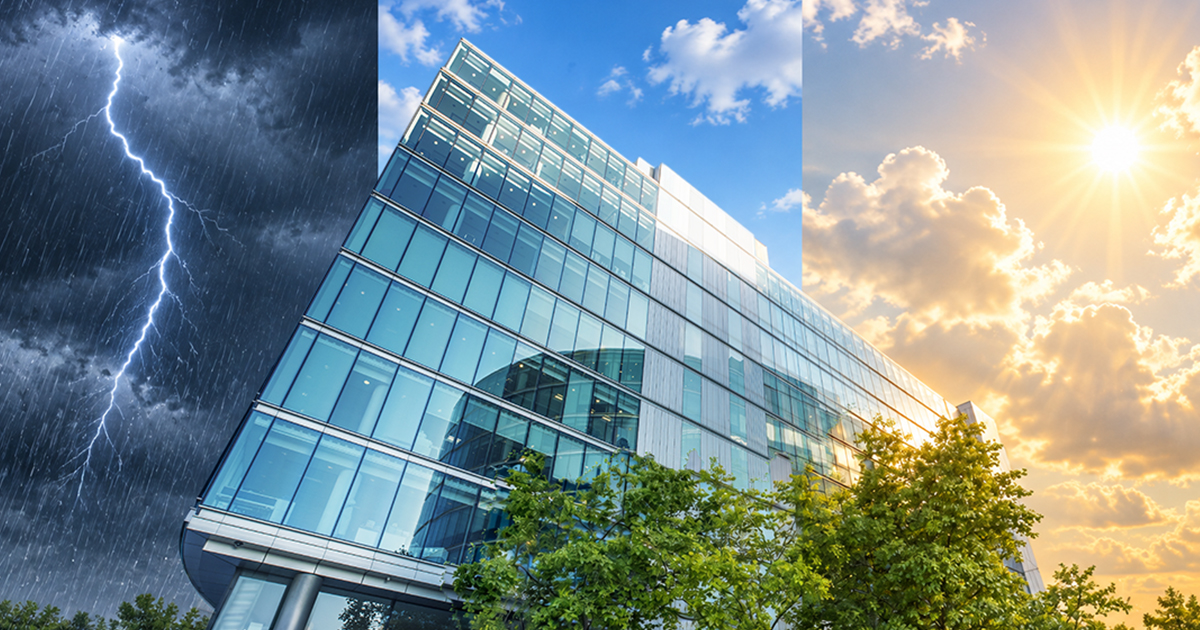
In the Philippines, businesses and individuals alike often need to prepare for two opposite risks throughout the year: water shortages and extreme heat during El Nino, and sudden floods or heavy monsoon rains and typhoons during La Nina season.
This 2026, the Philippine Atmospheric, Geophysical, and Astronomic Services Administration (PAGASA) warned that El Nino is expected to be very strong between September and December. It is expected to last through the first half of 2027.
Business continuity should cover compliance to fire safety, workplace safety, and overall ability to keep the doors open.
How do you disaster-proof your office or business space?
-
Keep certifications updated, on hand
Ensure that the Fire Safety Inspection Certificate (FSIC) required by the Bureau of Fire Protection is available and attached to a business permit. It is also wise to have an Occupation Safety and Health (OSH) program with an emergency plan to ensure everyone’s disaster and emergency readiness.
-
Do regular space maintenance
Check on ventilation and insulation, sprinklers, alarms, and extinguishers are all working. Electricians must also check wiring, panels, and aircon loads before peak heat is felt to avoid overloading circuits.
Check the integrity of structure, fixtures, and even placements of servers and supplies especially in ground floor spaces. Anchoring tall shelves, cabinets, and heavy equipment is good for overall safety.
-
Update your BCP
Prepare a simple business continuity plan for decision-making trees, employee audit system, and how to keep the work running smoothly amid dire circumstances. Backing up data to location outside the office or city can be vital for overall continuity.
How can a general contractor help strengthen your space against disasters?
-
Structural assessment and retrofitting
General contractors usually have a structural engineer that can help check and assess your building against the National Structural Code of the Philippines for earthquake resistance and overall integrity.
-
Typhoon proofing roof
The NSCP has updated its wind load provisions for Philippine typhoons, and your contractor can help reinforce roof framing and anchors, and even replace weak windows, doors, and cladding.
-
Flood mitigation: Fire, electrical upgrades
Raising floor levels, improving drainage, and even relocating electrical panels and equipment above flood lines are MEP and structural jobs your general contractor can cover.
-
Water and power resilience
Adding cisterns, water tanks, rainwater catchment, and backup generators need proper structural support and permitting.
-
Permits and accountability
Building permits and plan preparations can be done by a PCAB-licensed contractor just to ensure they match the category with the project requirements.
Builds are crucial partnerships especially amid disasters. Hire a firm that works with you. Contact bd@corebilt.ph today.