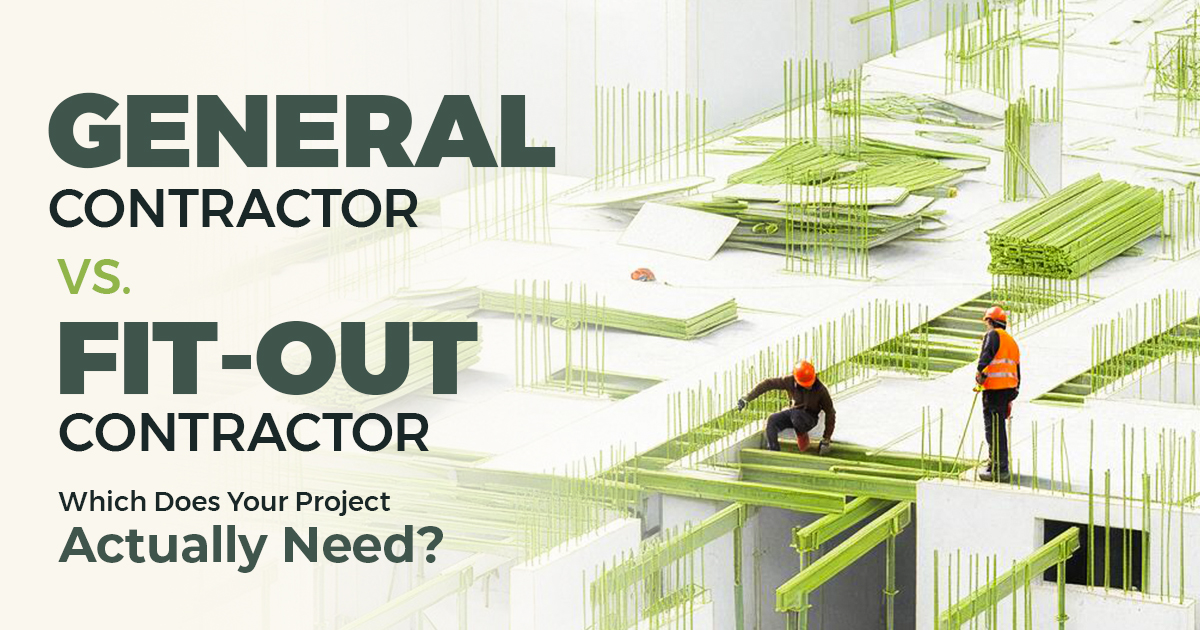
In the Philippines, general contractors build or structurally renovate a building while a fit-out contractor focuses on turning an existing shell into a finished space with usable interior. Typically, general contractors work best for new construction, extensions or structural work while fit-out contractors do offices, retail spaces, and interior work inside existing buildings.
Assessing the project scale and requirements remain crucial since picking the wrong kind of contractor can result in permitting issues, delays, and rework.
What is the difference between a general contractor and fit-out contractor
The scope each contractor covers is the main differentiator. General contractors manage the whole build from foundation and structure to roofing or major Mechanical, Electrical, and Plumbing systems.
Fit-out contractors come into existing spaces to work on interiors such as partitions, flooring, joineries, lighting, furniture, and other key fixtures.
Leading Philippine general contractors can often do fitout works under one contract for maximum efficiency.
What are the benefits of a general contractor vs a fit-out contractor?
General contractors’ strength is the breadth and the single-point accountability as it can cover all trades, structural builds, and one firm is doing the coordination matched with proper Philippine Construction Accreditation Board (PCAB) license.
This is often packaged with end-to-end project management which also includes all pre-construction preparations such as permitting guidance, cost monitoring and timeline facilitation, and post-construction maintenance services.
Fit-out contractors, on the other hand, specializes in interiors which means faster turnaround time, and in-depth know-how on building administration’s regulations or operations.
Clients also experience design-and-build convenience since space planning, design, engineering, permits and construction is under one contract. Fit-out contractors are also equipped to handle adjustments and maintenance after handovers.
How do you choose what contractor works best for your project?
If the work touches a structure, a general contractor is the ideal pick. For interior work inside a finished shell, a fit-out firm is usually better fit.
Here are other key considerations:
Licensing
Before starting any project or engaging with a contractor, make sure to verify the contractor’s PCAB license. It is important to check when it was last renewed, and what category your project needs to fall in.
Permitting
Building permits also include interior work which is part of regulatory scope. Most cities treat a tenant fit-out as building work that will require a permit. Commercial fit-outs often require locational or zoning clearance, barangay construction clearance, building approval alongside local government permits.
Fire Safety Evaluation Clearance, signed plans and inspection certificates are part of the compliance process.
Building administration
Always check with a building’s own manual on approved materials, work hours, and rules for contractors before finalizing design and starting construction. Some buildings will require cash or construction bonds, work permits, and workers’ lists.
Timeline & Budget
Setting a realistic timeline to cover all space planning and compliances is ideal. This also helps carve out a realistic budget for the space requirements.
Bid Comparisons
Ensure quotations are properly itemized and question any vague miscellaneous or provisional-sum lines. Be wary of bids that are way below market value as this might indicate non-compliance or shortcuts detrimental to safety or labor.
Find the perfect firm to service the needs of your space. Contact bd@corebilt.ph to get started.